

How to Mix and Match Patterns Like a Pro
Professionals do not “be bold.” They pick a dominant print, a supporting print in a different scale, and a color that appears in both. A wide stripe with a small geometric, a floral with a fine check, paisley with a solid that samples its rust—that is the job. Zara and H&M will sell you two prints from the same drop that were designed to match; that is a set, not mixing. Start with something you already own, then add one pattern, not a whole new identity.
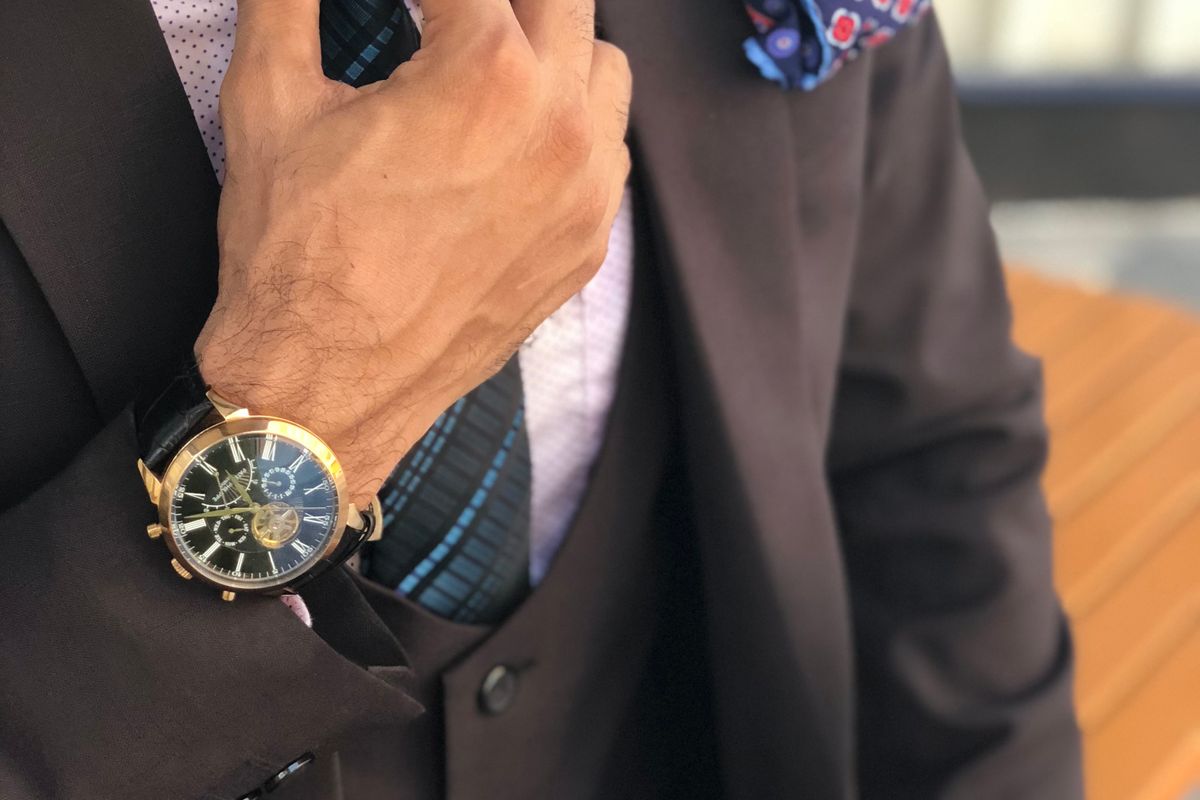
Scale first: one large print, one small, rarely two mediums
If both prints are the same visual weight, the eye has nowhere to rest. A large floral skirt wants a tiny stripe or a micro-check shirt, not another bouquet. A broad rugby stripe wants a small dot or a quiet herringbone. Keep one piece closer to solid if you are new at this—a navy trouser under a printed shirt is still mixing if the shirt has two colors. Stand back from the mirror. If it looks like a sofa throwing up, change the scale, not your personality.

Steal a color from print A and repeat it in print B or the shoe
The shared color is the peace treaty. If the dress has olive and cream, the check shirt should contain one of those, or the shoe and bag should. A red in both prints will look intentional even if the motifs disagree. Neutrals (black, white, navy, camel) can be the bridge. This is why a Burberry check (real or not) sits next to a solid camel coat: the beige is already in the plaid. Do not introduce a third bright that appears in neither pattern unless you are doing sport color-blocking on purpose.
Stripes, florals, checks, and animal: combinations that usually behave
Tried pairings:
- Stripe + floral (different scale)
- Check or windowpane + solid knit, or check + small geometric
- Paisley + fine stripe
- Animal print as “neutral” with one other organic print, or with all solids
- Polka dot + stripe if one is much finer
Animal print plus another animal print is a safari gift shop. Logo jacquard plus a busy floral is a fight. Denim counts as a texture, not a print, unless it is printed denim—then it is a print and should be the only one.
Accessories and tailoring: the mixer’s safety valves
A solid blazer over two prints calms the whole thing—COS or a navy J.Crew blazer is the adult in the room. A solid bag and shoe do the same. Patterned socks with patterned trousers is a magician’s trick; skip it unless you are on a menswear forum. If you wear Lululemon prints to the studio, do not add a patterned jacket on top; the rest of the street outfit should go solid. When in doubt, take one pattern off and add a better earring.
The takeaway
Lead with one print, support with a different scale, and repeat a color. A solid jacket or shoe is allowed to keep the peace. Mixing like a pro is a small set of rules you can see from across the room, not a dare.